Hips
Used for squatting, stepping and walking. Coaches often look at how comfortably a person can hinge, rotate and hold a deep squat.
Mobility describes how freely and how confidently a joint moves under control. This guide explains the vocabulary, the common patterns coaches work on and the practical limits of any general routine.
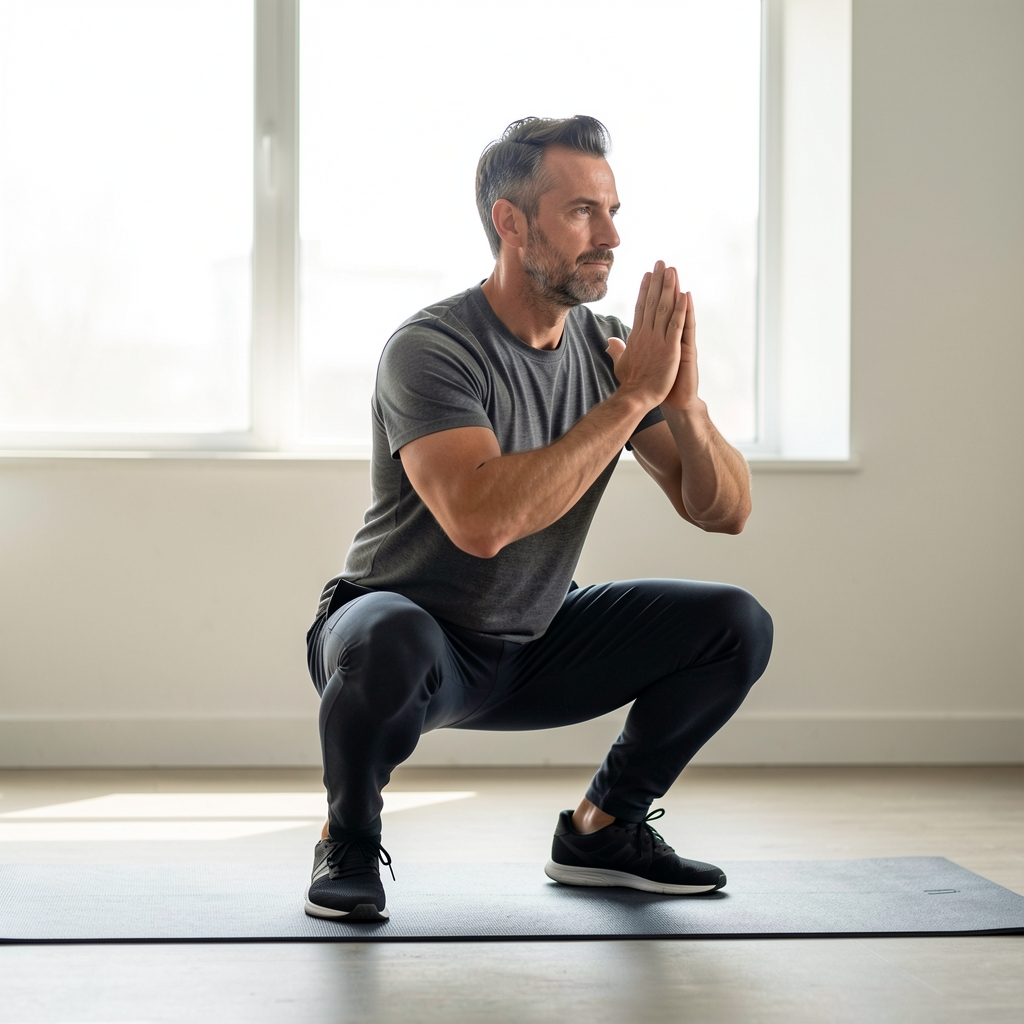
Most mobility work for adults centres on a few regions that are used constantly and often become stiff with long periods of sitting or repetitive tasks. The descriptions below are general, and individual needs will differ.
Used for squatting, stepping and walking. Coaches often look at how comfortably a person can hinge, rotate and hold a deep squat.
The upper back moves in rotation and extension. Limited movement here can influence how the shoulders and neck work overhead.
A highly mobile joint that depends on shoulder blade movement. Coaches observe reach, rotation and control in positions above the head.
Ankle movement affects walking, running and squatting. The ability to bring the knee forward over the toes is a common reference point.
Often overlooked, but important for lifting, carrying and desk work. Gentle circles and loaded positions are usual starting points.
Movement here is shaped by posture and screen use. Work is typically gentle, slow and guided by comfort.
These three words are often used interchangeably. Distinguishing them can make conversations with coaches and physiotherapists more precise.
| Term | Meaning | Example | Question it answers |
|---|---|---|---|
| Mobility | Controlled movement through a joint’s range | Lifting the arm overhead without arching the back | Can I use this range actively? |
| Flexibility | Passive length of muscle and connective tissue | Reaching toward the toes while seated | How far can this tissue lengthen? |
| Stability | Ability to control a position under load | Holding a single-leg stance with a steady trunk | Can I hold this position when challenged? |
Joints and tissues adapt to what they are asked to do. People who spend many hours seated may find their hips and upper back move less freely, while people who train hard in a narrow range may find that other ranges feel unfamiliar. Neither situation is unusual, and neither is a verdict on fitness.
Mobility work is a way of keeping a broader menu of movements available. For many adults the practical benefit is simple: getting up from the floor, reaching a high shelf or playing with children feels easier and more comfortable.
The routine below is a common structure for a short daily session. It is an example of how mobility practice is often organised, and it can be shortened or adapted. Anyone with an injury, pain or a medical condition should seek individual guidance first.
Stand or sit and take slow breaths while gently moving the neck and shoulders.
Make slow circles at the wrists, elbows, shoulders, hips and ankles.
Include a gentle hip hinge, a supported squat and a slow trunk rotation.
Hold one comfortable position for a few breaths and note how it felt.
Mobility practice should feel exploratory, not painful. The prompts below are general guidance on when to adjust.
Stretching a tissue is one thing; being able to use the new range under control is another. The second is what makes movement feel easier in daily life.
Physiotherapists and movement coaches often make this distinction when explaining why a general routine may feel different from person to person. It also explains why mobility work is usually paired with strength and balance practice. For related pages, see strength and recovery.
Practice varies. Many coaches favour gentle, active movement before activity and longer holds afterwards, but studies do not point to a single correct order. Choose the pattern that feels comfortable and sustainable.
Responses vary widely between individuals and depend on history and consistency. Keeping a short log, as described on the performance lab page, helps you judge for yourself.
No. This guide is educational and does not replace assessment or care from a qualified professional. See the disclaimer for the full statement.
The routines and descriptions on this page are intended for general education. If you have pain, an injury or a medical condition, arrange an assessment with a qualified professional before trying new movements. The health check preparation page can help you plan the conversation.
Contact the editorial desk