Before activity
Choose food you digest comfortably and allow enough time for the session.
Training nutrition can be grounded in ordinary meals, cultural context and flexible preparation. We examine energy, protein, hydration and the habits that make food less stressful.
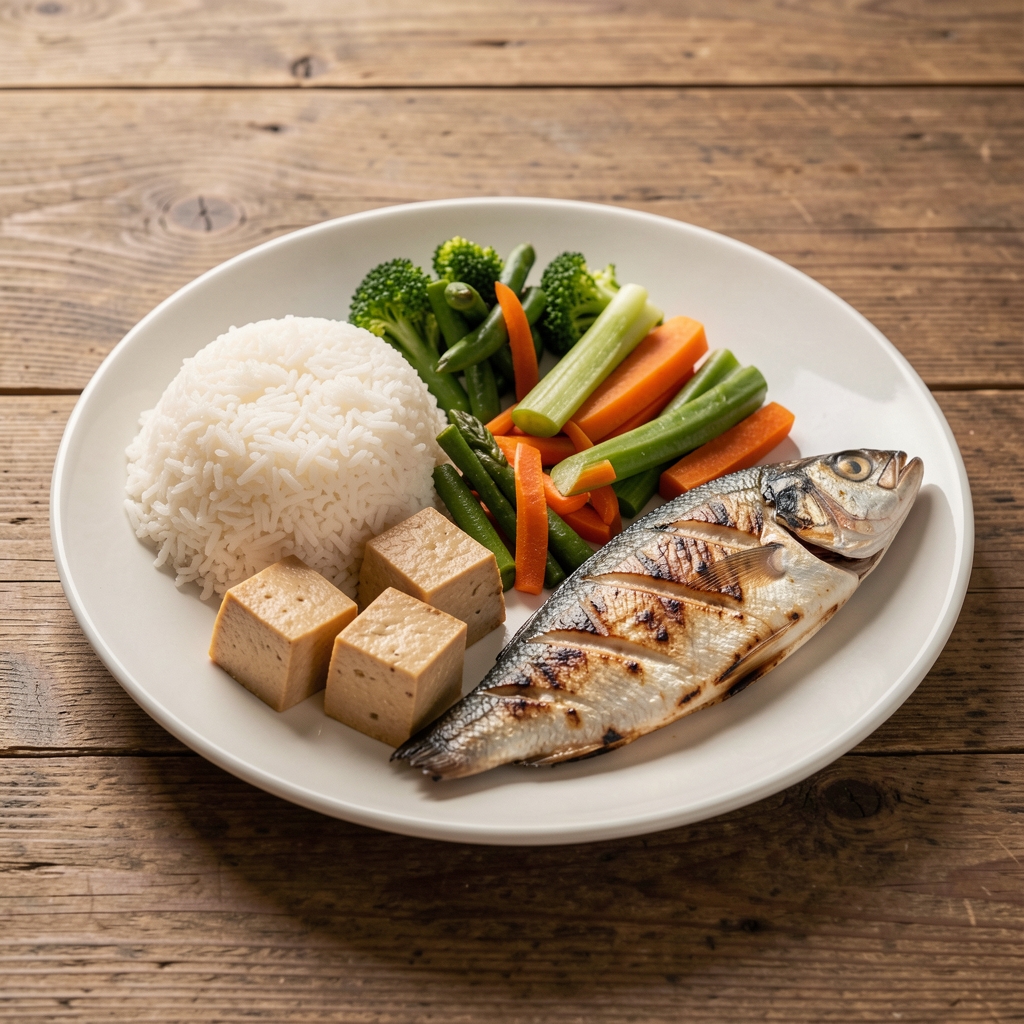
A useful plate often includes a carbohydrate source, protein, colorful plants and a satisfying fat. The proportions change with appetite, training demand and health context. There is no need to turn every meal into a spreadsheet. Repetition can be supportive when it leaves room for enjoyment.
Choose food you digest comfortably and allow enough time for the session.
For extended endurance, fluids and carbohydrate may deserve deliberate planning.
A normal meal with protein and carbohydrate can support repair and the next day.

Prepare two or three reliable options rather than chasing a perfect menu. In Indonesia, rice, tempeh, eggs, fish, fruit and vegetables can form a practical foundation alongside family meals. Hydration needs also respond to heat, sweat and session length.
Good nutrition is a pattern of support, not a punishment for training.
Supplements deserve the same skepticism as any other claim. Food, sleep and training structure usually provide the larger context.
Support your training with food that is familiar, satisfying and realistic.
Suggest a nutrition topic