Position
Stable positions let force travel through the body with less wasted effort.
Strength training after 35 can be progressive without becoming theatrical. Learn how exercise selection, volume, tempo and rest shape a durable practice.

Strength is specific to positions, speeds and tasks. A heavier lift may be valuable, but so can a controlled carry, a confident step down or the ability to produce force without provoking an old irritation. Begin with the movement that matters and choose a variation you can repeat.
Stable positions let force travel through the body with less wasted effort.
Move with clear purpose while keeping the load appropriate to the day.
High-quality strength work needs enough rest to remain skillful.
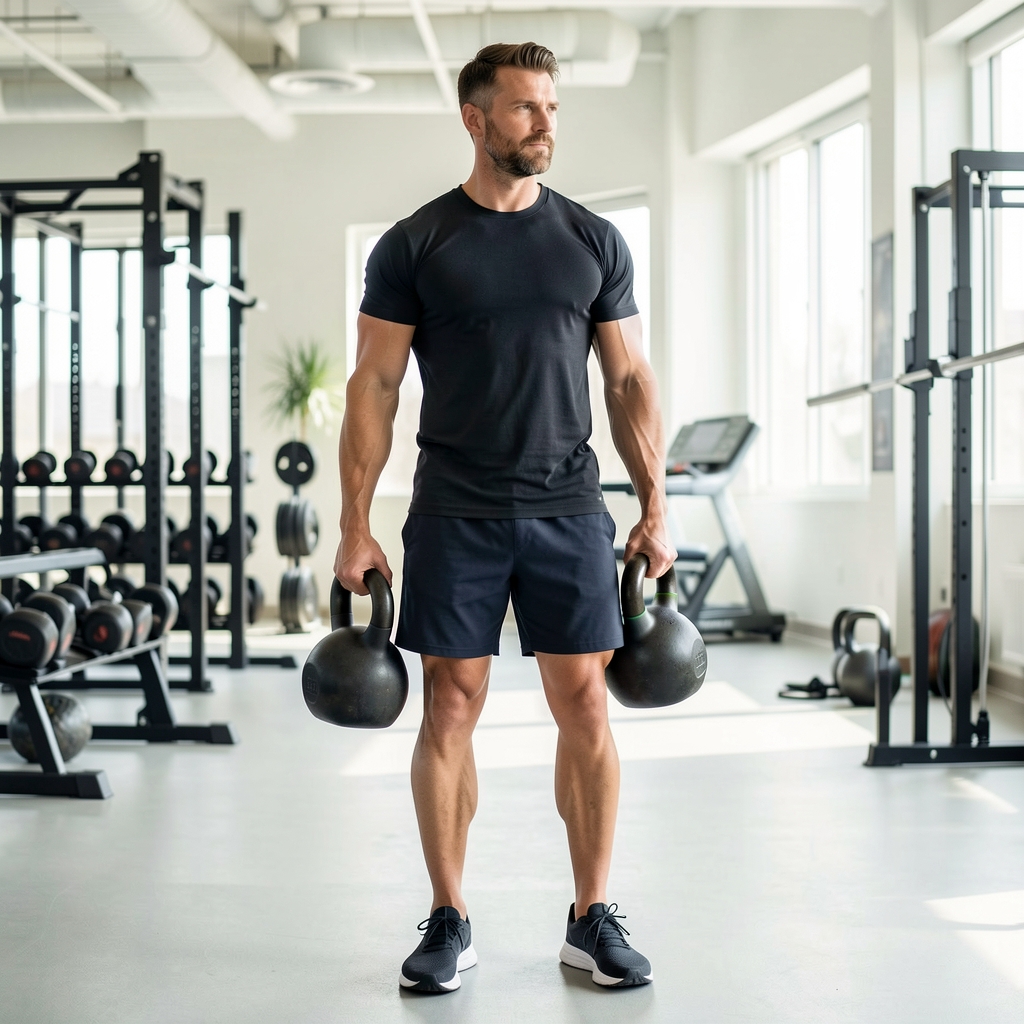
Squat, hinge, push, pull and carry patterns create opportunities to observe breathing, balance and control. Rotate variations when a joint needs a different angle, not because novelty is automatically better. Progress may be a cleaner repetition or a calmer set.
Choose a variation that gives you useful feedback tomorrow.
| Observe | Question |
|---|---|
| Technique | Did the final repetition resemble the first? |
| Effort | Was there room to repeat the work with control? |
| Response | Did the next day feel normal enough to move? |
Keep the work relevant, measured and connected to life.
Return to training foundations