Glossary

A calmer vocabulary for training.

Definitions can make a confusing conversation more precise. These entries explain common terms and include the limits that keep them useful.
Open sports physiology reference book beside handwritten training definitions and a simple stopwatch

Core terms in plain language

Twelve terms appear again and again across the Meliora library. Each definition is short on purpose, followed by the point where it stops being useful. Read them as working descriptions rather than rules, because the same word can carry a slightly different meaning in a running club, a strength gym and a physiology laboratory.

Aerobic base
The capacity to sustain lower-intensity work using aerobic energy pathways. It is influenced by training history and context, and it is usually described over months rather than days.
Progressive overload
A gradual increase in a meaningful training demand. It does not always mean adding weight; it can be more repetitions, more control, shorter rests or a longer duration.
Perceived exertion
A person’s reported sense of effort. It becomes more useful when paired with conditions and performance, such as heat, sleep and the pace that was actually held.
Aerobic threshold
The intensity below which effort feels sustainable and conversational. Laboratory methods and field estimates can place it in slightly different spots for the same person.
Lactate threshold
The intensity at which blood lactate begins to rise faster than it is cleared. The term has several definitions in the literature, so the method used matters as much as the number.
Heart rate variability
The variation in time between successive heartbeats. Consumer devices estimate it differently, and a single reading says little without a personal baseline.
Resting heart rate
The number of beats per minute at complete rest, ideally measured in the same posture and at the same time of day. Day-to-day changes are common and are not a diagnosis.
Training load
An attempt to summarise how much work was done, usually by combining duration and intensity. Different formulas weigh those two ingredients differently.
Periodization
The planned arrangement of training emphasis across weeks and months. It is a way of organising effort, not a requirement to follow a particular template.
Deload week
A planned period of reduced training demand, often one week in four to six. Its length and shape depend on the individual and the surrounding schedule.
Range of motion
The distance and direction a joint can move. Active range, where you move it yourself, and passive range, where something else moves it, are different measurements.
Functional training
Exercise chosen because it resembles movements a person performs in daily life or sport, such as lifting, carrying, stepping and rotating. The word “functional” has no single technical definition.

Terms that are often confused

Some pairs of words sound interchangeable but describe different things. The table sets out what each term describes, what it cannot tell you on its own, and where the library discusses it in more depth.

Term pair What the terms describe What they do not tell you Related page
Aerobic vs lactate threshold Two reference points on the intensity scale, one lower and one higher. Which one matters for a particular event or person. Endurance
Fatigue vs soreness General tiredness versus localised muscle discomfort after unfamiliar work. Whether either is a sign of anything beyond normal adaptation. Recovery
Mobility vs flexibility Controlled movement through a range versus passive tissue length. Whether the range is usable under load. Mobility
Volume vs intensity How much work was done versus how hard each effort felt or measured. How the two combined affect recovery needs. Training
Strength vs power Force produced versus force produced quickly. Whether either transfers to a given sport. Strength
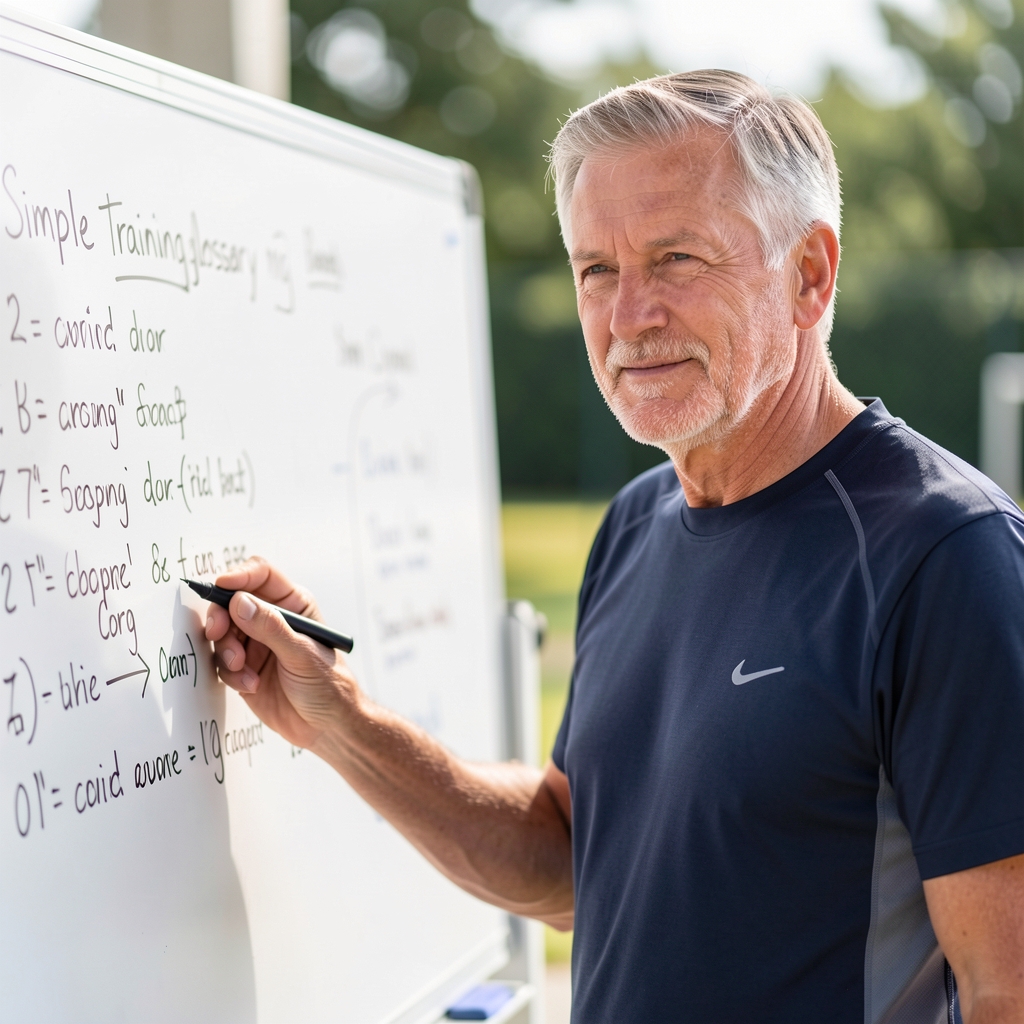
Coach explaining a simple training glossary on a whiteboard to a mature athlete in a bright studio

Terms need a home

No definition stands alone. Aerobic threshold, recovery and mobility change meaning with the sport, the person and the question being asked. Use the glossary as a starting point, then return to the full article and the professional context around it.

Precision is not the same as certainty.

Three habits help when a term is unfamiliar:

  • Check who is using the word and what they are measuring.
  • Look for the method behind any number attached to it.
  • Notice whether the claim still makes sense when the number is removed.

How to use this page

  1. Find the term you heard in a conversation or article.
  2. Read the definition and the stated limitation.
  3. Ask what decision the term is meant to improve.
  4. Open the related page if the decision affects your own routine.

Readers aged 35 and over often return to training after a gap, or shift from one sport to another. In those moments a precise word can slow down a hasty choice. If you notice that a term is being used to sell certainty, step back and read the Meliora methodology to see how we evaluate claims.

Questions about the glossary

Why are definitions kept so short?

A short definition is easier to compare across sources. Longer explanations, with studies and examples, sit in the topic pages linked from each entry.

How often is the glossary reviewed?

The editorial desk reviews the entries each quarter. The most recent review took place in 2026, and corrections are listed on the editorial policy page.

Can I suggest a term?

Yes. Write to [email protected] with the term and the context in which you met it, or use the contact page.

An educational note

The glossary explains vocabulary. It is not a diagnosis, a prescription or a substitute for the judgement of a qualified coach or health professional who knows your history.

Read the full disclaimer