1. Frame the question
Each piece begins with a specific reader question, such as how aerobic base work changes after 40 or how to read a rising resting heart rate. A narrow question keeps the answer honest.
Every article on this site follows the same editorial path: define the question, gather sources, test the reasoning, and state the limits. This page explains each step so readers can judge our work for themselves.
Read the editorial policy
Men over 35 face a particular set of questions about load, recovery and ageing physiology. We write for that audience, which shapes how we frame each topic.
Each piece begins with a specific reader question, such as how aerobic base work changes after 40 or how to read a rising resting heart rate. A narrow question keeps the answer honest.
We prefer peer-reviewed studies, position statements from recognised sports medicine bodies, and textbooks in exercise physiology. Practitioner experience is included and labelled as such.
The writer drafts in plain language. A second editor then looks for overstated claims, missing context and any wording that sounds more certain than the evidence allows.
Articles carry a publication date and, where relevant, a review date. Pages are revisited when new evidence changes the picture, and corrections are noted openly.
Technical terms are explained on first use and collected in our glossary, so readers new to physiology can follow along.
Where the evidence is thin, mixed or drawn from younger populations, we say so near the top of the article rather than in a footnote.
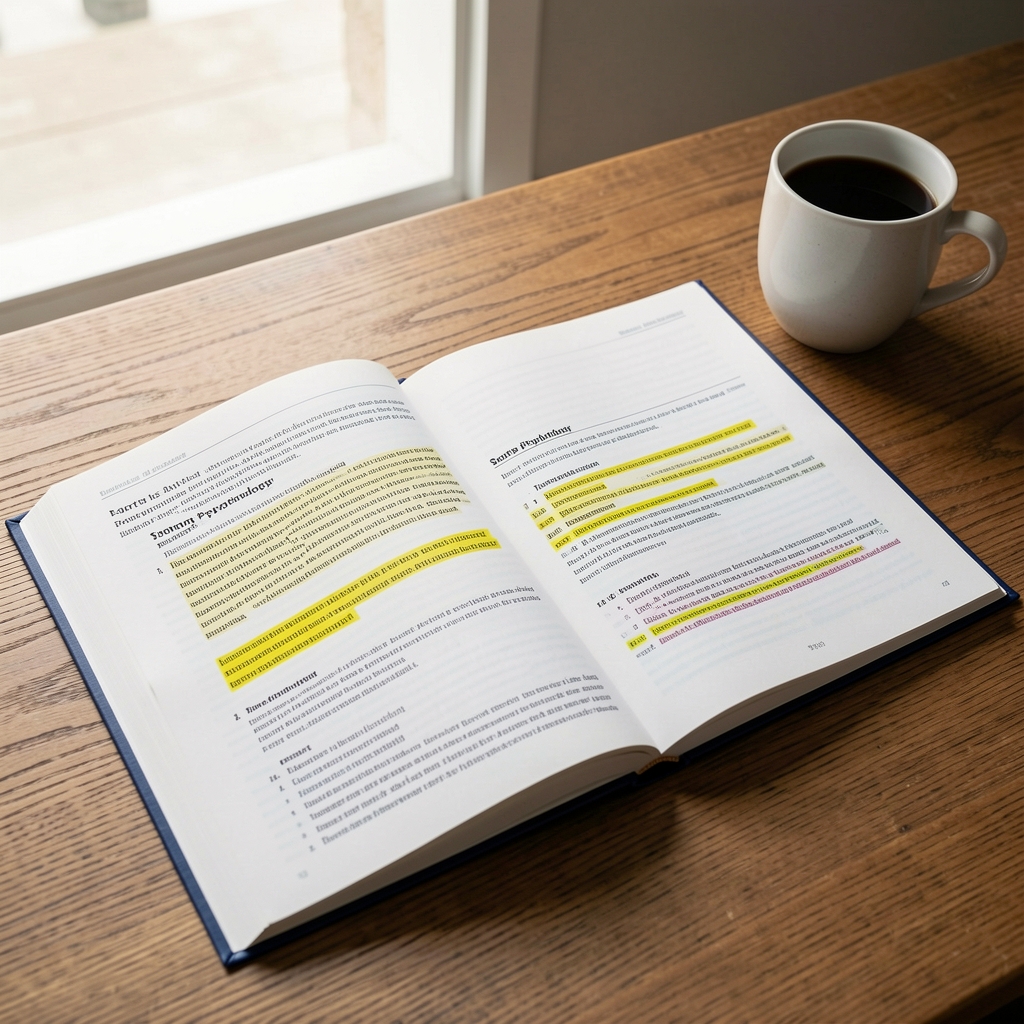
We rank evidence by how directly it answers the question. A systematic review of trials in adults over 35 carries more weight than a single small study, and a small study carries more weight than an opinion piece. We keep this ranking visible so that a reader can see why a statement was included.
Sources that are not used as the basis for a claim include testimonials, undated forum threads and commercial product pages. If a topic relies mainly on these, we describe the gap instead of filling it.
For guidance on reading studies yourself, visit the Research Desk.
The table below summarises how we describe the strength of support behind a statement. These labels appear in the introductions of longer articles.
| Tier | Typical basis | How we phrase it |
|---|---|---|
| Well supported | Consistent results across several controlled studies or reviews | “Research consistently shows…” |
| Emerging | A small number of trials or observational findings that point the same way | “Early evidence suggests…” |
| Practitioner view | Coaching and clinical experience without formal trial data | “Many coaches report…” |
| Unclear | Conflicting results, or studies in very different populations | “The evidence is mixed…” |
A careful “we do not know yet” is more useful to a reader than a confident guess.
Our contributors include exercise physiologists, strength and conditioning coaches, endurance athletes and science writers. Each author's background is listed on their article and on the About page.
Reviewers check for accuracy and tone. They do not receive payment tied to any product or service mentioned, and the site carries no sponsored articles. Our approach to advertising is described on the advertising page.
Writers share personal training stories in Field Notes and Profiles. These sections are labelled as personal accounts, not as research.

Our articles are general education. They cannot replace an assessment by a doctor, particularly for chest pain, dizziness, joint injury or a long break from exercise. See our health checks guide.
Individual response to training varies with genetics, history, sleep, stress and nutrition. We describe ranges and trade-offs, not fixed results.
Articles are not written to move readers toward a purchase. Any equipment mentioned is described for its function, without ranking brands.
If you notice an error, an out-of-date statement or a source we have misread, please tell us. We review every message, correct the page where needed and add a short note describing the change and its date.
Last methodology review: 2026. Questions about this page can be sent through the contact form, or browse the FAQ for common answers.
Send a correction